Welcome to the Newsletter from N.C. Cooperative Extension, Lincoln County Center. We are pleased to have such a great community to serve and help support the mission and vision of Cooperative Extension in this wonderful county that we live in. Thank you for your continued support and dedication! This publication is for upcoming events and information from our Agents.
July 2026 Newsletter

Fireworks & Farm Safety
by Tanya Binafif
As you celebrate Independence Day, please remember that fireworks can have a significant impact on our local farms and livestock. Loud noises and unexpected flashes can frighten livestock and other farm animals, causing stress, injury, or even animals escaping from fences. Fireworks can also pose a serious fire risk to hay fields, barns, pastures, and stored feed during the hot, dry summer months. If you choose to use fireworks, be mindful of nearby farms, follow all local laws, and celebrate responsibly by keeping fireworks away from agricultural areas. By taking a few extra precautions we can help protect our local farmers.
July Bounty
by Rachel Evans
July is "Got to Be NC Agriculture Month," marking a peak period of high productivity for North Carolina's multi-billion-dollar farming industry. As midsummer heat and humidity settle across the state, fields, orchards, and pastures operate at full capacity. The Western regions are bustling with the harvest of summer staples like sweet corn, tomatoes, cucumbers, and watermelons—along with the heavy ripening of peaches and early apples. It is a demanding month filled with long hours of manual labor, but it also brings communities together at local farmers' markets, showcasing the immense seasonal bounty that anchors NC's rural economy.
4-H Youth Development
by Tanya Binafif
As we celebrate Independence Day with family and friends, Lincoln County 4-H encourages everyone to make safety a top priority when enjoying fireworks. Fireworks should always be handled by responsible adults and used only where they are legal. Never allow children to light or handle fireworks, including sparklers, which can reach temperatures of more than 1,000 degrees and cause severe burns in just seconds. If you choose to use fireworks, always read and follow the manufacturer's instructions. Keep a bucket of water or a garden hose nearby, to soak fireworks after use. Be mindful of surrounding homes, livestock, pets, and farmland to help keep our entire community safe during holiday celebrations.
Recently, 4-H wrapped up an exciting Drone Camp in partnership with the Lincoln County School Board, providing youth with hands-on, classroom-based learning experiences that connected STEM education. Participants explored how aviation and drone technology are woven together and how these skills translate into future career opportunities. The camp also included educational field trips to the Charlotte Douglas Air Traffic Control Tower and the Hickory Aviation Museum, where youth gained a deeper understanding of aviation careers, airspace management, and the many pathways available within the aviation industry. These experiences helped bring STEM education to life and inspired youth to think creatively about their future goals.
Although summer is flying by, the fun isn't over yet! 4-H will continue our Summer Science Exploration program every Monday and Thursday throughout the remainder of the summer. Youth are enjoying hands-on STEM activities, exciting experiments, and educational adventures that spark curiosity, creativity, and a love for learning. If you have a child who is interested in participating, there is still space available. Please contact the 4-H Office to register or learn more.
Horticulture
by Trevor Reese
With summer in full swing farmers and gardeners alike will notice an abundance of insects around the landscape from sunup to sundown. It's important to monitor plants regularly for signs of pest presence and damage. But remember, not all insects are pests. It's important to promote beneficial insects like pest predators and pollinators while discouraging harmful insects, so here are some tips to keep in mind while gardening outside this month.
Healthy plants attract fewer pests so make sure you are watering, fertilizing, and pruning your vegetables and other plants in a way that promotes healthy growth and reduces stress. Remove rotten or insect-infested fruit from the garden to prevent problems from spreading.
Identify unknown insects by utilizing phone apps or sending in photos to Cooperative Extension to determine if an insect is a pest or not. In small numbers some pests can be removed by hand, crushed, vacuumed, or even lint-rolled off of plants without the need for pesticide applications. Hand-removal is a great way to target pests without causing damage to beneficial insects.
When hand-removal is not sufficient for pest management, pesticides can be utilized so long as they are applied according to label requirements. Always consider low-toxicity options first before selecting more aggressive chemical treatments. Many organic and natural options such as Neem oil, insecticidal soaps, as well as other horticultural and botanical oils can be used effectively to prevent or reduce the impact of pests in a garden. Potential harm to pollinators and plants can be reduced by applying products such as these in the early morning or in the evening. For pests that cannot be effectively controlled by these options, be sure to choose products that are safe to use on target plants and are proven effective against the pest you've identified. NC Extension publications are a great resource to determine which pesticides are right for your situation.
by Trevor Reese
Livestock & Field Crop
by Bella Roeske
Hello! My name is Isabella, or Bella, Roeske, and I am your new Lincoln County Field Crop and Livestock Extension Agent. I am looking forward to meeting and working with producers across the county. In the next few weeks, I will be making my rounds to visit farms and introduce myself in person, so please keep an eye out for emails or calls asking to stop by! Please also feel free to come into the office in town, call, or email to chat or if you have any questions.
A little about me is that I recently moved to the area with my fiancé and our three cats from Pittsburgh, Pennsylvania. While in PA, I managed a genetics lab at the University of Pittsburgh and completed my thesis for my MS in Agribusiness from Virginia Tech. I studied dairy goat production in the Southeast, focusing specifically on nutrition and parasites. Before that, I earned my BS in Environmental Sciences from Emory University in Atlanta, Georgia. While I am originally from Virginia, I have explored the East coast, and I am thrilled to be in North Carolina with you all. As everyone tells me, it is a perfect blend of mountains, ocean, and everything in between.
Now for some pertinent news and information. As someone who has studied bugs for years (ask me about my summer collecting ticks across Georgia), the New World screwworm has been top of my mind, as I am sure it has been for all of you livestock farmers. My fiancé is from Texas, so we have been watching the news in the Southeast as new cases have been identified in cattle, goats, sheep, and even a dog.
While this parasite has, understandably, caused a stir and caused anxiety for farmers, there is some good news, especially for us here in North Carolina. First, this parasite is not new. While it hasn’t been identified in the U.S. for 60 years, it has been successfully eradicated in the past. Second, the risk right now is very low in North Carolina. The situation is being monitored closely by the North Carolina Department of Agriculture and Consumer Services Veterinary Division, in addition to the USDA. Regardless, though, it is important to know the signs and check your animals. Look for little white maggots or egg masses in open wounds, as well as body openings (ear and nose canals). Also, pay close attention if you smell decay or notice signs of illness, such as self-isolating behavior, pain, and/or a loss of appetite. If you see something you think that might be signs of New World screwworm, contact your local veterinarian!
Dr. Andy Moorhead, associate professor of parasitology at the NC State College of Veterinary Medicine, recommends that all livestock and pet owners keep an eye on the USDA New World screwworm website, found here, for up-to-date information.
For my field crop farmers, the U.S. Drought Monitor has Lincoln County classified as in a "severe drought” as of June 16th. We can continue to hope for rain in the coming days and weeks, and, when it comes, be sure to watch those weeds. They can sprout quickly with a little bit of water, so keep walking your fields, and be prepared with whatever your chosen preventative measures are.
If you have any questions or concerns, please don’t hesitate to reach out via email isabella.roeske@ncsu.edu , or call (704) 736-8461! I look forward to meeting you all soon!
FCS
Family & Consumer Sciences
by Rachel Evans
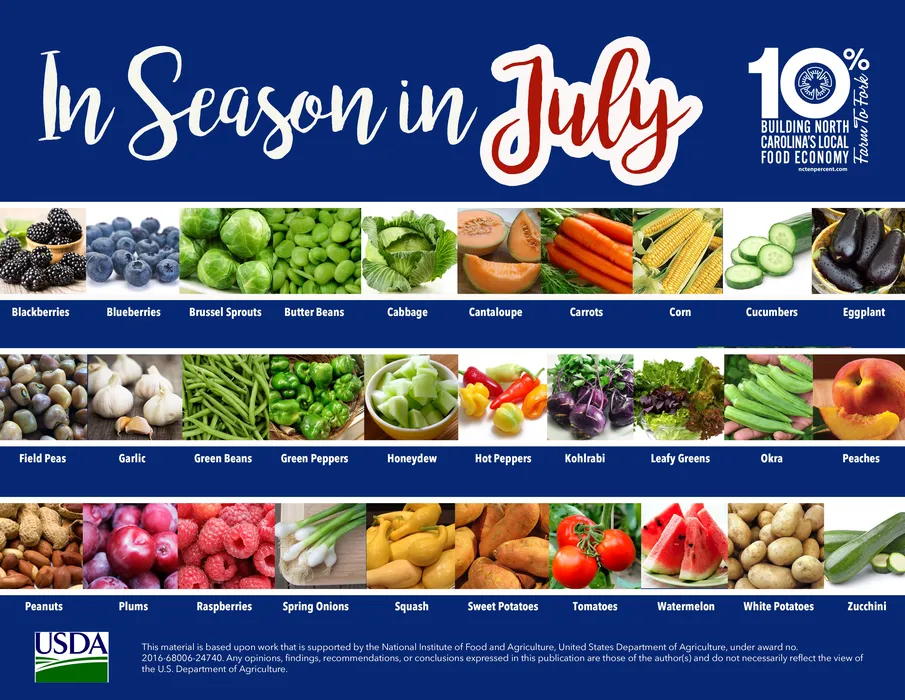
July means a full bounty at Farmers Markets, here’s what is in season this month: blackberries, blueberries, brusselsprouts, butter beans, cabbage, cantaloupe, carrots, corn, cucumbers, eggplant, field peas, garlic, green beans, green peppers, honeydew, hot peppers, kohlrabi, leafy greens, okra, peaches, peanuts, plums, raspberries, spring onions, squash, tomatoes, watermelon, white potatoes, and zucchini.
Calendar of Events
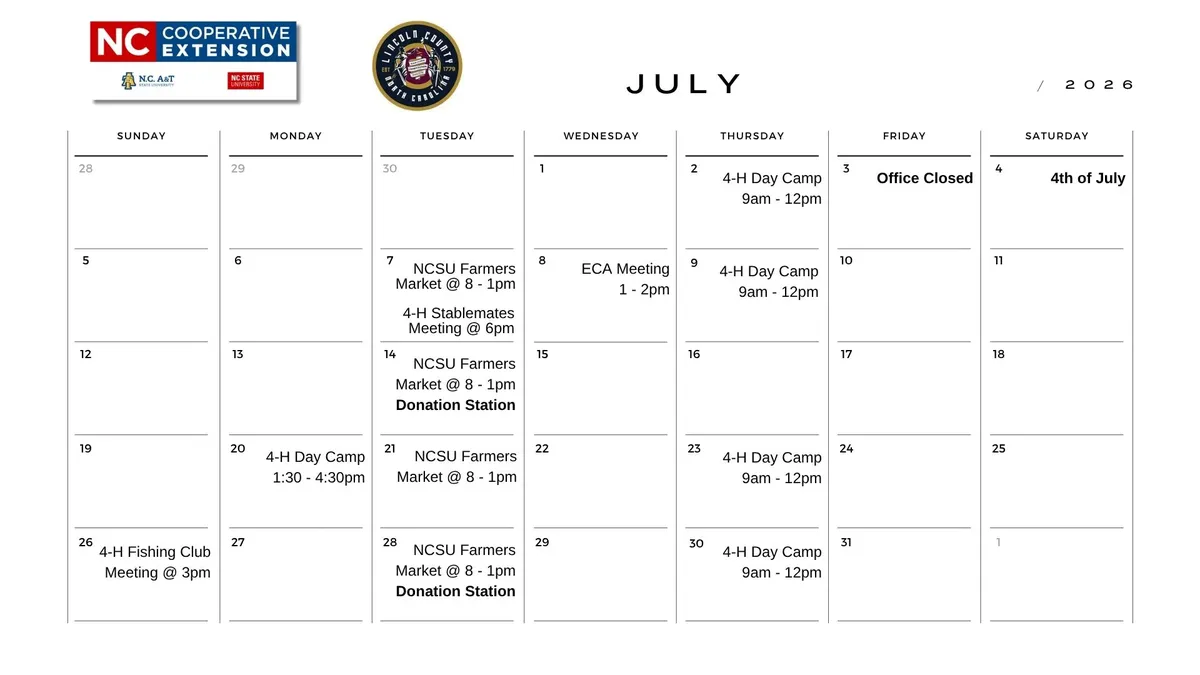
NCSU Farmers Market - Each week Cooperative Extension provides a venue for our local farmers to connect with our community members at the Farmers Market Pavilion on East Waters Street. Our hours are unique, Tuesday from 8:00am til 1:00pm, which helps our farmers within our community to have an additional day to sell items. In addition, we invite a food truck to set up during the Farmers Market. Come Out and visit us each Tuesday until the end of November!
Donation Station - The Donation Stations seek to improve access to fresh, locally-grown food while supporting the farmers who grow it. It is designed to combat local food insecurity whole raising awareness that a healthy local food system must include every member of the community.
4th of July - Office Closed Friday, July 3rd in observance of the 4th.
4-H Summer Days of Exploration Day Camps - Is for youth ages 5–18 who are excited to discover the world of STEM through hands-on science experiments and interactive activities. Campers will explore the mysteries of science, develop essential life skills, build confidence, and make new friends in a fun, engaging learning environment. Contact the 4-H office for more information or to register your youth.
4-H Stablemates Club Meeting - The Lincoln County Stablemates 4-H club is for youth interested in horses. Contact the Club Leader with any questions: Karen Williams- kkwill2025@yahoo.com
4-H Fishing Club - The Lincoln County 4-H Fishing Club is for youth interested in fishing. Contact the Club Leader with any questions: Edward Stroup- edwardstroup@gmail.com
Join our mailing list!
Enter your email address to receive updates.
Written By

Contributors


